Studio Art Honors II & III
  • Current Assignments
  • Course Expectations
  • Galleries
  • Resources
  • Burlington High School Art & Design Program

Homework: Color Design: Art Principles

4/15/2016

0 Comments

 
Due: Thursday, April 28, 2016

Project:
A high-quality color design that focuses on several principles of art. It can be representational (realistic or stylized) or non-representational ("abstract").

Medium: Any

Size: Large (Bigger than sketchbook)

Time Commitment: 3+ hours over the next two weeks

Slideshow: Composition and the Principles of Art

Review: Composition Terms

0 Comments

Review: Elements and Principles of Art

4/13/2016

0 Comments

 
Slideshow: Composition and the Principles of Art

Composition


Composition – the arrangement of elements such as line, value, and form within an artwork; principles of design are considered in order to achieve a successful composition.

Picture plane – the flat surface of a composition

Negative space – the areas of an artwork not occupied by subject matter, but which contribute to the composition. In two-dimensional art, the negative space is usually the background.

Positive space – the areas containing the subject matter in an artwork; the objects depicted, as opposed to the background or space around those objects.

Center of interest – the area of artwork toward which the eye is directed; the visual focal point of the work.

Dynamic – in a state of imbalance or tension

Perspective – an artist’s representation of a three-dimensional world on a two-dimensional surface.


The Elements of Design

  • Line

    Contour lines – lines that describe a shape of a figure or an object and also include interior detail.

    Implied line – a suggested line – one that was not actually drawn or incorporated – in a work of art.

  • Shape – It is two-dimensional and encloses area; can be geometric or organic

  • Form – three-dimensional and encloses volume (or appears to be three-dimensional and    appears to enclose volume)

  • Value – refers to the lightness or darkness of grays and colors

  • Color – different aspects of color are hue, saturation (intensity), value, temperature

  • Space / Depth – the illusion of distance

  • Texture – an artwork’s actual or implied surface quality, such as rough, smooth, or soft


The Principles of Design

Balance – the organization of the parts of a composition such that the sides of a vertical axis are approximately equal; it can be symmetrical, asymmetrical, or radial.

Contrast – refers to differences in elements such as color, texture, value, and shape. Contrasts usually add excitement, drama, and interest to artworks.

Value contrast – dark and light values placed close together. Black in proximity to white creates the greatest value contrast.

Emphasis

Dominance – a concept that one primary element attracts more attention than anything else in a composition. The dominant element is usually a focal point in the composition

Unity – the sense of oneness or wholeness in a work of art.

Variety -

Pattern/Repetition – the repeated use of elements or combination of elements forms a recognizable organization.

Movement – a path that the viewer’s gaze is directed to follow because of the arrangements of elements in an artwork.

Rhythm – the result of pattern combined with implied movement. Elements or motifs are combined to create a series of regular pauses (stops and starts) for the viewer’s eyes, similar to the way a drumbeat creates a series of pauses for the listener’s ears.

Proportion – the relative size of one dimension of a shape or form to another dimension of the same shape or form

Scale – the relative size of a figure or object, compared to others of its kind, its environment, or humans

Slideshow: Composition and the Principles of Art

0 Comments

Encaustic Paintings

4/7/2016

0 Comments

 
Due:
Tuesday, April 12, 2016

Project:
Create a small series of small encaustic paintings on rigid, porous surfaces (plywood, unglazed ceramic tiles, etc.). Experiment with the material using various techniques. Consider the importance of good design as you work. Be expressive.

Grading Criteria:
  • Personal Investment
  • Exploration/Experimentation -- Inventiveness
  • Expression
  • Quality of Design/Composition/Color Relationships
View the portraiture work on Mr. Ratkevich's website (georgeratkevich.weebly.com) and the portfolio website of encaustic painter Tracy Spadafora to see examples of approaches with the encaustic medium.

​Also view the work of artist Karl Zerbe. How has he applied the elements and principals of design to his work? In what ways is his work expressive?
0 Comments

Homework: Risks and Rewards

4/7/2016

0 Comments

 
Picture
Due:
Wednesday, April 13, 2016

Project:
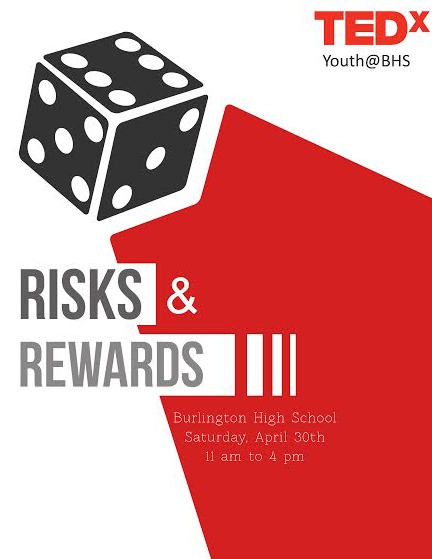
Create an artwork that conveys a personal interpretation of the theme "Risks and Rewards". How do these concepts apply to teens?

Your work will be on exhibit in the main lobby of the TedXYouth Conference. Students whose work is displayed on the day of the event will receive recognition in their official program.

Medium:
Any (including drawing, painting, mixed media, sculpture, or graphic design)

Size:
Any

Parameters:
  • It may include the words "Risk and Rewards", but avoid any other words. Make your statement with imagery rather than with writing.
  • Devote at least two or three hours on this artwork.
  • (The official logo for the event is on the image above. You may include something like it in your own work if you choose.)

Grading Criteria:
  • Creativity/Innovation
  • Concept and Communication -- Expressiveness
  • Design -- Application of Principles of Design -- contrast, balance, emphasis, harmony/unity, variety, movement, etc.
  • Technical Quality -- Skillful use of materials and techniques; Should look refined, polished, professional
  • Personal Investment

Below are some visual concepts to help your creative brainstorming:

0 Comments

    Mr. Ratkevich

    781.273.7024
    [email protected]

    Archives

    December 2022
    November 2022
    October 2022
    September 2022
    August 2022
    March 2022
    February 2022
    January 2022
    December 2021
    November 2021
    October 2021
    September 2021
    June 2021
    May 2021
    March 2021
    February 2021
    January 2021
    December 2020
    November 2020
    October 2020
    February 2020
    January 2020
    November 2019
    October 2019
    September 2019
    August 2019
    June 2019
    May 2019
    March 2019
    February 2019
    January 2019
    December 2018
    September 2018
    March 2018
    February 2018
    January 2018
    November 2017
    October 2017
    September 2017
    April 2017
    February 2017
    November 2016
    October 2016
    June 2016
    May 2016
    April 2016
    March 2016
    January 2016
    December 2015
    October 2015
    September 2015
    August 2015
    June 2015
    May 2015
    March 2015
    February 2015

    Categories

    All

    RSS Feed

Powered by Create your own unique website with customizable templates.
